
Why Does Modern Life Feel So Boring?
A Tale On Our Need For Adventure

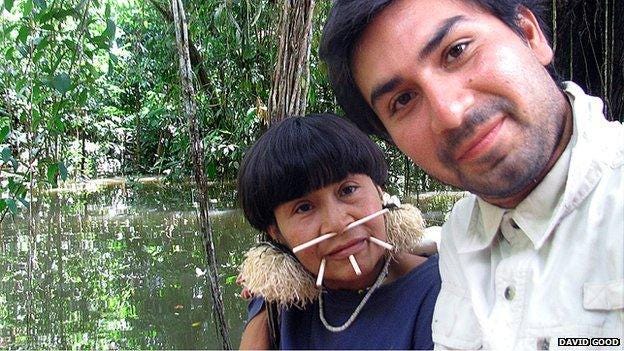
In 2011, David Good, an American man, left his house in Pennsylvania to embark on a journey to the Venezuelan rainforest to look for his mom, Yarima, a woman from the Yanomami tribe, after being separated for nearly two decades.
After three exhausting days on the Orinoco River, David Good was overcome with sickness. He was far from a natural adventurer.
Mosquitoes had feasted on his skin without mercy. He was drained, parched, and sticky with sweat in the heavy, suffocating air.
This story starts when his dad, Kenneth Good, came to the forest years earlier as an anthropologist to study the Yanomami.
Days became years, he became totally immersed in the Yanomamis’ world, and he eventually married a girl from the tribe, Yarima, who became his fiancée from a young age, according to the tribe's customs. They had three children together and later moved to the U.S.
Yarima had never left the jungle, and the outer world was totally strange to her; she thought the police were an especially fierce tribe that all lived in the same village. She warily observed the policemen and policewomen with their guns. Whenever she saw them, her eyes searched for their police children and police babies.
“Every little aspect of this world was new and unique and strange to her,” says David Good. “When you turn on a car, it kind of looks like an animal with the headlights - I heard stories she would hide behind a bush.”
From Return to the rainforest: A son’s search for his Amazonian mother
When he took Yarima to the U.S., the world turned cold. The walls hummed with silence instead of cicadas. Asphalt streets replaced rivers. Neighbors never looked into her eyes.
Yarima struggled to adapt to modern life, feeling isolated, disconnected, and overwhelmed.
One morning, she was gone. She decided to return to the jungle and leave everything behind.
David, her son, finally found Yarima in 2011 after a long journey. Their emotional reunion was marked by tears and silence, a meeting that bridged two worlds separated by culture, time, and geography.
But Yarima’s escape from the modern world (even if it meant leaving her children behind) reveals something deeper than culture shock. It exposes the vast divide between how we live now and how we were meant to live. We may have forgotten our origins, but our bodies haven’t.
For over 95% of human history, we lived as hunter-gatherers, wired for connection, movement, and nature. Those ancient neural pathways still fire within us, restless and confused in a world of walls, screens, and isolation.
A Need For Adventure
One in four Americans feels bored with their life.
The average respondent said they fantasize about going on some sort of adventure four times every day, but only 10% said they felt they could be adventurous on any given day, the survey commissioned by Storyteller Overland for American Adventures Month in August found.
Life as hunter-gatherers was brutally hard. Around 27% of infants didn’t survive their first year, and nearly half never made it to puberty. Even centuries later, in 14th-century England, people needed passports just to travel within their own country, a rule imposed after the Black Death to keep workers from leaving their villages.
Life has never been easy. Yet, despite all our progress, our brains still crave something ancient, something we once had and somehow lost.
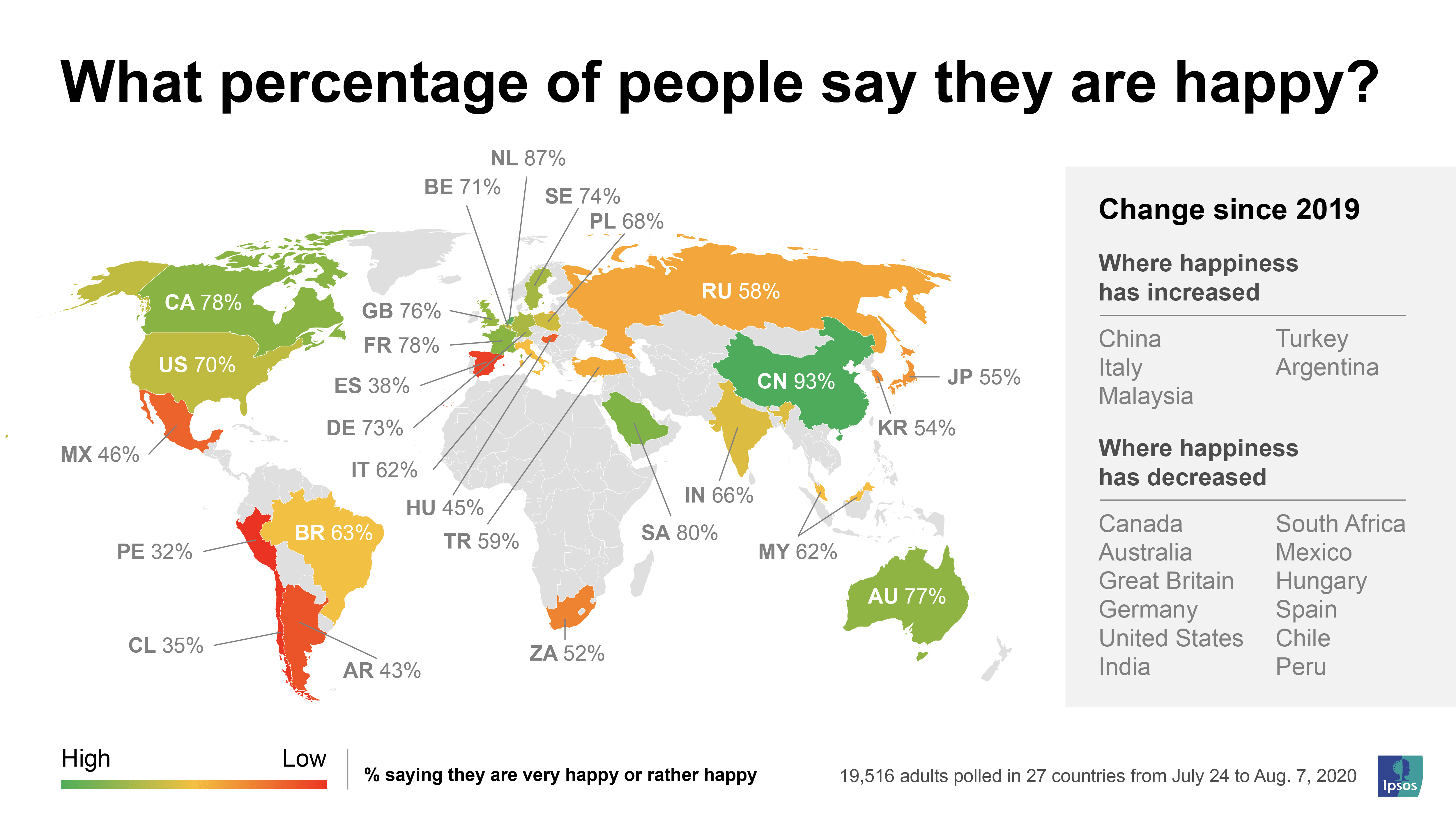
Look at the countries where happiness decreased; among them, you see, ironically, the richest countries in the world.
In my most viral article to date, Become The Main Character Of Your Life Before It’s Too Late, we discussed these issues, and some of the comments highlighted the fundamental problem:
… The next few years were rough. I lived in residence hotels and a rented room… After 5 or 6 years, things were better; I met some great friends, and I met my wife, who sadly is no longer part of my life. Looking back, I realize that despite the difficulties, it was the adventure of my life.
Comment from Jimmie Oakland
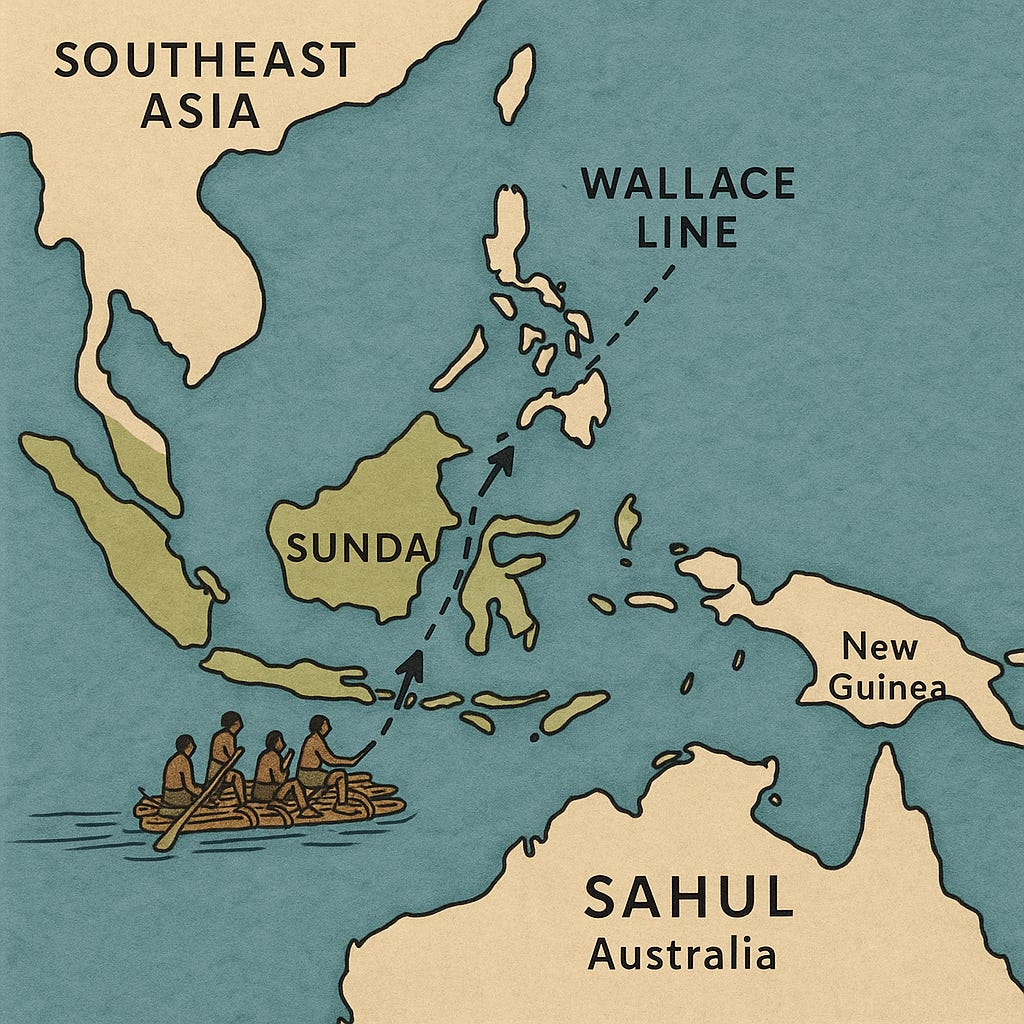
We’ve always been explorers; it’s in our DNA. Around 60,000 years ago, when Neanderthals and Homo floresiensis still roamed the Earth, our ancestors, speaking only the earliest forms of language, made the bold decision to cross open oceans to settle in what we now call Australia, they used simple rafts or canoes to cross the Wallace Line, a deep-water gap between the Indonesian islands and Sahul (the ancient continent that included Australia, Tasmania, and New Guinea).
What was the need for that? Or what was the need of going to the moon in a pressurized can?
The Fundamental Problem
Imagine the life of a 25-year-old woman living in New York, let’s call her Sarah. She was born in Rhode Island and moved to the big city for better job opportunities. Her parents earned a comfortable living running a local business that served ship owners; their lives are simple, they are mostly happy, and they gave Sarah all of their love while she was growing up. She had everything she needed.
Sarah has used social media since she was very young. Her heart beat faster and faster every time she saw the lifestyle of the New Yorkers. She dreamed about living there, finding her prince charming, and becoming famous.
She moved a year ago and is now working as a marketing junior at a consultancy company. New York is super expensive, so she’s trying not to go out that much to save money.
Today is Friday night, she’s working from home, and she has made no plans for the weekend. She closes her laptop and opens Instagram. Her friend Evelyn posted some stories on her trip to Miami, Emma is having dinner with her boyfriend, and Mia is going to a party with her friends.
She feels a little void in her chest.
Around 2012, when teens swapped flip phones for smartphones and people flocked to Instagram, teen girls began showing higher rates of depression than other groups. Jean Twenge’s research on Generations suggests one key reason: they were the heaviest social media users, with 31% spending five or more hours daily online, compared to much lower rates among other groups 1.
She opens the reels and guess what’s there… the same reels that she watched back home, the lavish lifestyle, the romantic dinners, the boats, the fame.
She continues scrolling like she’s waiting for something to fill her void. Nothing is enough… Sarah ends up thinking about how she hates marketing, and she’s now trapped in her new life.
Arthur Brooks, a professor at Harvard Business School, argues that boredom is essential for mental health and meaning in life.
When our minds aren’t occupied, we activate the default mode network, a part of the brain that turns on when we’re not focused on external tasks. This state encourages reflection and deep thinking, often leading to uncomfortable but important questions about purpose and meaning.
Modern society, however, has nearly eliminated boredom through constant digital stimulation. Every time we feel even slightly bored, we reach for our phones, preventing the mind from wandering and reflecting. This avoidance creates what Brooks calls a “doom loop of meaning,” contributing to the rise of depression, anxiety, and a sense of emptiness.
How To Make Your Life Exciting
Sarah decided to stop using Instagram and instead opened X to watch the global news, a serious mistake…
She reads all kinds of political debates and ends up consuming a lot of content about women's rights. It looks like the world is against her; she feels like a victim; she’s horrified.
She ends up frustrated, sad, eating ice cream, and disconnecting with her favorite series, one about a girl who gets cheated by her boyfriend.
The next morning, Sarah’s friend Eva invites her to spend the next weekend in her country house in Rhode Island. Sarah immediately accepted and was excited about it for the entire week.
Not having a plan for the weekend was Sarah’s first mistake. Avoiding life is very easy thanks to social media and TV. Back when we didn’t have those amenities, we had to plan everything; even a small trip without maps would be an entirely different experience, and staying at home wasn’t that exciting. Even the fallbacks, like going to the local bar, were healthier experiences than using social media or watching Netflix.
She’s a very smart young woman, and she realizes something key: what if she’s the one planning something fun for her and her friends for next weekend? It doesn’t have to be expensive…
That’s enough for a first level of making your life exciting:
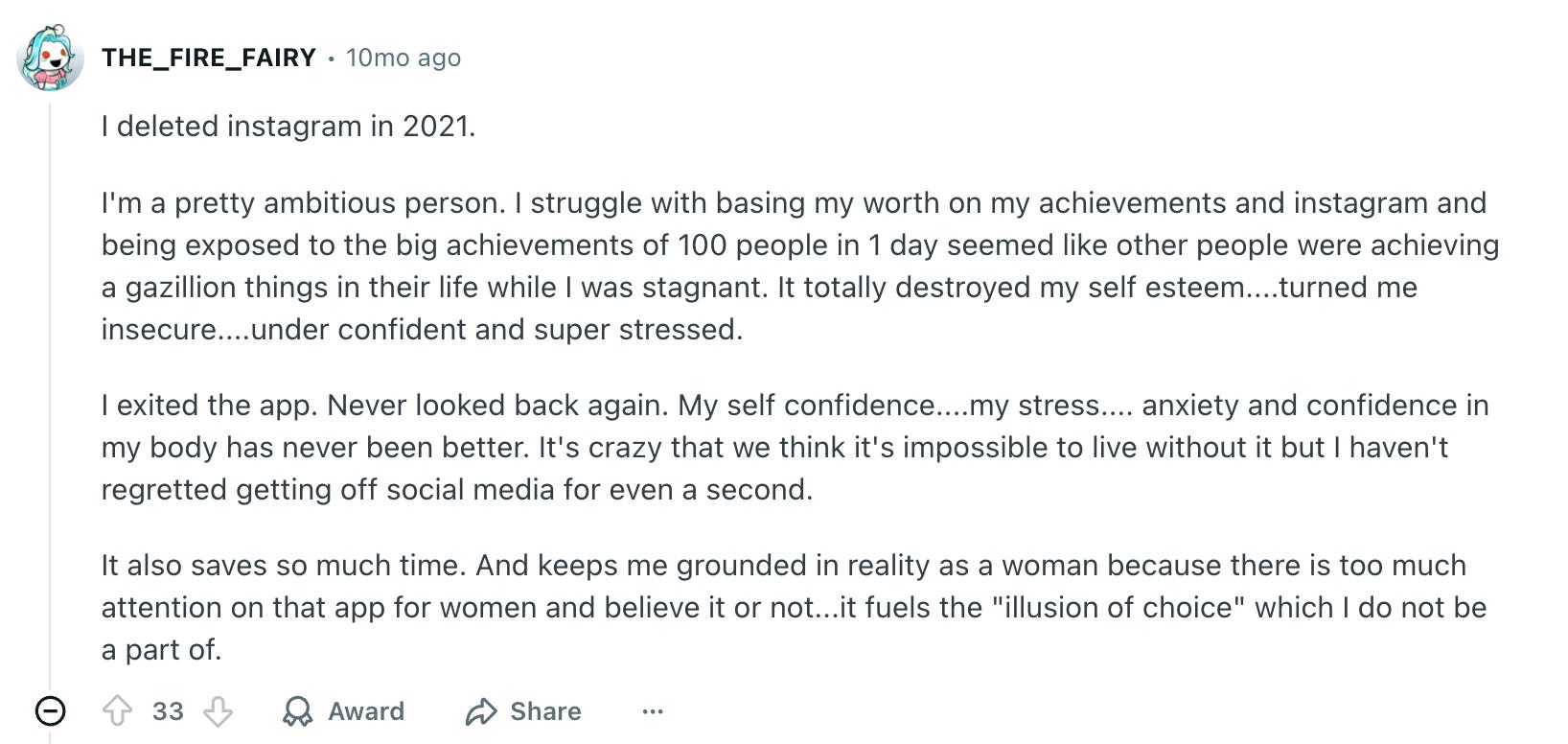
Stop using social media that much, delete the apps from your phone
Stop watching that much negative content; you’re going to enter a loop of negativity
Plan your free time so you don’t fall back into social media, porn, or any other addictions
Be always the one proposing plans for your friends, they are probably bored too
But is there something else?
Trascend
You already know where you’re meant to go. Some worlds call to you, worlds you’ve glimpsed but haven’t yet entered. Maybe it’s the world of the professional dancer, the fluent Spanish speaker (es una aventura que te recomiendo), the plane pilot, or the thoughtful writer who creates great books.
Yet our instincts and our culture pull us in the opposite direction. Between our fear of discomfort and the endless novelty of our devices, we spread ourselves thin. We go wider instead of deeper, choosing easy pleasures over slow transformation. It’s simpler to scroll, to replay the same song, or to listen to another podcast than to wrestle with Aristotle or practice those clumsy guitar chords again.
What would you do if you couldn’t use any digital distraction for an entire week?
Live a life of making bold decisions, and you’ll never feel empty again.
Lovely. I’m sharing it with my daughter, who just moved to NYC out of college. She is doing all the time - sometimes random stuff like painting ceramics, but always something.
We taught her that most things are more accessible than they see, not big parties or jets, but restoring an old couch or listening to live music.
State of mind.