
How To Become Fearless
What Neuroscience, Behavior, and Real-World Experience Reveal About Fear

Here are 30 seconds of one of the most shocking videos in history.
As the legend says, Mexican singer Chalino Sánchez reads a death threat and immediately continues singing. He was executed by a cartel the next day.
Chalino’s tremendous willpower to continue the show is admirable. But being strong isn’t just about going to war or singing after your life was threatened.
Being strong is also about making your children laugh when you don’t know if you’ll have enough money to feed them, dealing with personal problems without telling your parents so as not to worry them, or even battling the fear of leaving your house to go to work.
The human condition can be extremely difficult, but we are also extremely strong and resilient creatures.
In this post, we’ll travel through history to teach you techniques that peak performers use to accomplish fearless things.
Hi! My name is David. Several years ago, I became obsessed with studying human behavior as a way to push myself beyond ordinary limits. Along the way, I uncovered the hidden patterns that shape modern life and influence the way we act. Today, I use those insights to help people break free from The Matrix and operate at their highest potential.
The Genetics of Fear
Let’s talk about the obvious before continuing, because I can smell the comments: you are right, nobody can be completely fearless unless they are neurodivergent.
Fear is a natural state of mind that activates our fight-flight-or-freeze response when physical or emotional danger is near.
Ever since humans developed language, we’ve used it to gossip. Some scholars even suggest that language itself evolved so we could talk about other people1.
Gossip can provide us with reputational information about other persons. This was key to surviving in ancient times, but it was also dangerous; if a story about you started to run in the tribe, you could be expelled, which almost certainly meant death. Our brains remember that, and that’s why we care so much about our reputation, even if today is not that important.

But fear can be a completely different experience for each person: modern research shows that several genes influence how intensely we react to danger: COMT affects how quickly we clear dopamine (and therefore how stressed we feel), and BDNF shapes how strongly we store frightening memories2.
These tiny genomic variations explain why one person might find haunted houses thrilling while another can’t even sit through a jump scare.
But our genes are only half the script. Fear is also sculpted by culture, upbringing, and the emotional imprints of our experiences. A child knocked over by a big dog may grow into an adult who crosses the street when a Labrador walks by, while someone who never had that moment will run straight toward it.
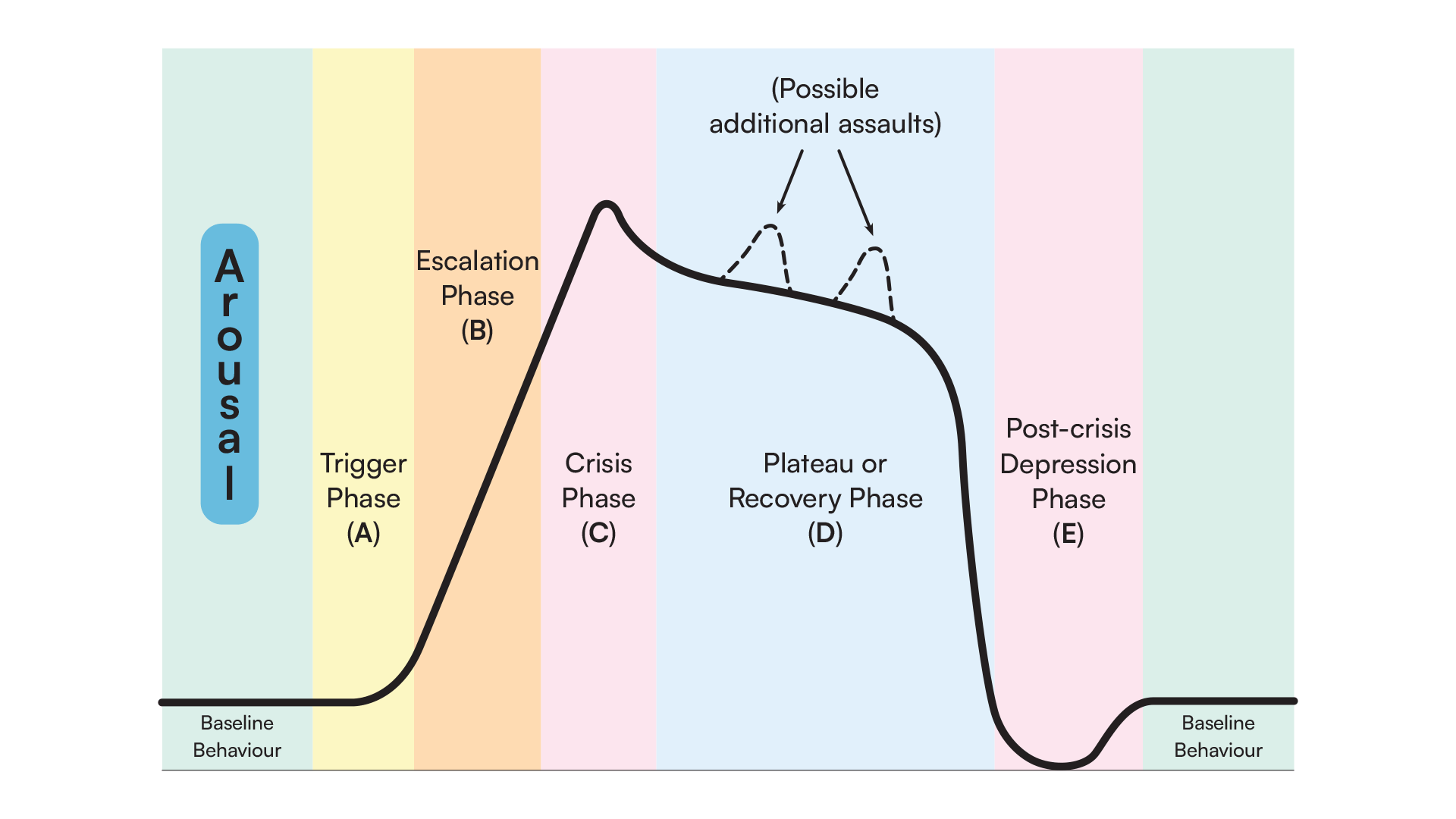
A person who was exposed to trauma will have an entirely different behavior than the baseline, which means that what are regular things for most people can be new triggers for them, even if they are not dangerous3.
Evidence For Your Brain
If you want your brain to adopt a new idea, the fastest path is to feed it evidence that the idea is true, because you cannot fool your mind.
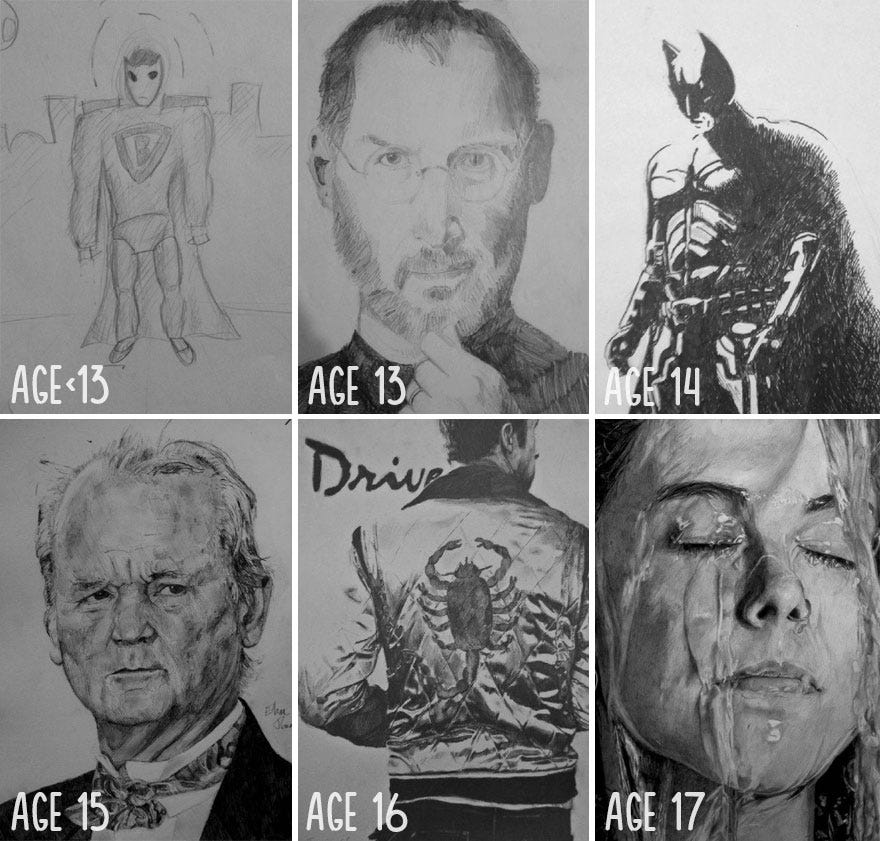
Your brain is always trying to optimize your life to achieve both basic goals and big dreams. Your wildest dreams could be anything from becoming a professional dancer to meeting the love of your life, but whenever you take a step toward achieving those dreams and fail, your mind slowly loses enthusiasm and is scared to try again; this is why most people become cynical with age. When you try to do things with the wrong approach, like trying to achieve too much in too little time, your mind is saving evidence that will prevent you from trying again in the future.
In the book “The Progress Principle”, the authors explain how some managers use a system of small wins to build momentum in meaningful work progress:
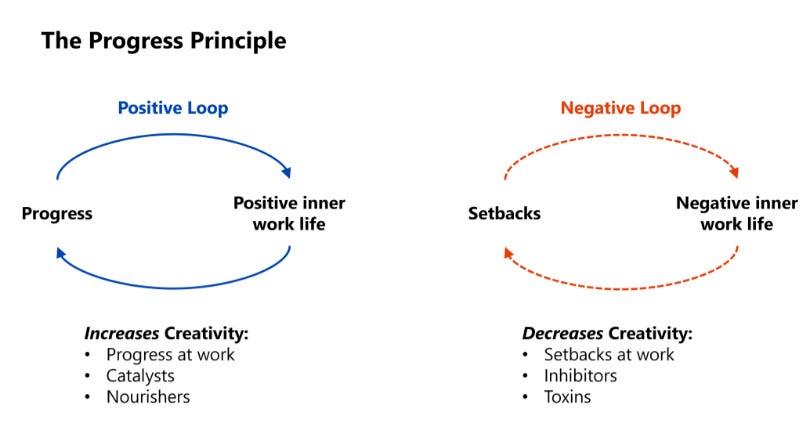
Peak performers consistently display an internal locus of control; they believe their actions determine outcomes, and they reinforce this belief by accumulating small, consistent wins that generate sustained motivational momentum.
One effective practice is to spend a few moments walking or daydreaming about your true long-term objectives, and then outline a set of small, actionable wins that can guide you in their direction.
Two quick examples:
You want to be a published author
Ask for feedback online (like with a Reddit post)
Create a short story and publish it or send it to a friend
Contact someone you admire and ask them for advice
You want to learn how to dance
Take that free class; it takes courage, but you can do it
Ask someone for recommendations
Just Google for some videos about dancing in your city
Just like static friction vs kinetic friction, something in movement is easier to move than something static, but remember never to try to fool your brain, no matter how little progress you make, and no matter if you have rejections (you will), fill your life with tens of little actions toward your goals.
Burn The Boats

In 1519, when Hernán Cortés landed in Mexico with a small force to confront the vast Aztec Empire, he made a dramatic decision: he ordered his ships destroyed (often retold as “burning the boats”). By removing any possibility of retreat, Cortés forced his men to commit fully to the mission ahead, win or die trying. This act was psychological warfare on his own army, transforming fear into resolve. With no way back to Cuba, his soldiers had only one direction left: forward. The moment became a powerful symbol of total commitment, eliminating the safety net so that success becomes the only option.
Sometimes we choose to burn the boats, and other times life forces our hand, like Chalino, already standing onstage with no way out but forward. Yet that moment of no return is one of the most powerful motivators we have. It’s the engine that pushes us to act, to work, to conquer new territory. When retreat isn’t an option, survival and progress become our only path.
Another example of burning the boats is one I did myself.
Have you noticed how Argentinians do these gestures while talking?

Between roughly the 1850s and the mid-1900s (peaking around 1880–1914), Argentina received millions of immigrants from Italy4.
As poverty deepened and land disappeared in southern Italy, entire families were forced to make an impossible choice: stay and wither, or cross an ocean with no guarantee of return. Argentina, with its booming economy and vast stretches of land, became the escape route, and for many, the place where they rebuilt their lives from zero.
When Italians emigrated to Argentina:
They left homes, villages, and often most of their possessions behind.
The journey and settlement were expensive; returning home wasn’t realistic for many.
The decision removed the fallback of staying in Italy under familiar but limited conditions; they had to commit to making the new land work.
When I came to Spain, I left everything behind, and returning was never on the table. That changed the way I approached life. I still find it interesting seeing that some people don’t share my urgency to grow professionally, as they can always fall back on the comfort of their parents’ home.
Burning your boats will push you in a desired direction even when your fear is holding you back.
Self-Delusional Belief vs Victim Mindset
Whether you think you can, or you think you can’t, you’re right.
Henry Ford

A couple of months ago, YouTuber Mr. Beast (James Stephen Donaldson) published a video that was scheduled 10 years ago. In the video, a much younger version of himself said he was hoping to reach 1M subscribers in 10 years, while showing his 8k subs at the time. When the video was published, he had almost 500 million subscribers.
In another video, he explained that it took him years to reach 1000 subscribers. This kind of confidence is delusional.
I’ve also found a direct correlation between success and our tolerance for rejection and failure. The more you train your mind to normalize failure, the more unstoppable you become.
The only way to build that level of confidence is through deliberate exposure.
Some years ago, when I was a junior developer, job interviews would drain me. I couldn’t sleep the night before, I couldn’t concentrate during the day, and my mind was constantly looping what-ifs. But after dozens of interviews, on both sides of the table, I have completely normalized them. The fear dissolved. Each interview became a chance to experiment, learn, and enjoy the conversation.
Fear is primal and useful, but it lies more often than it protects us. Our brains exaggerate threats and underestimate our capabilities. The way out is to stop approaching challenges from a victim mindset. When you visualize your best outcome instead of your worst, your brain starts working toward it automatically. You activate your prefrontal cortex and rewire your Reticular Activating System, the mechanism that controls what you pay attention to. Research5 shows that structured visualization can improve problem-solving performance by up to 44%, far outperforming traditional brainstorming.
Fear reveals where growth is possible and where skills or confidence still need to be built. When we stop treating fear as an obstacle and start treating it as feedback about our mind processes, it loses its control over us. The goal isn’t to eliminate fear, but to understand it, train for it, and move forward despite it. Progress comes from stepping toward the discomfort instead of away from it, and over time, what once felt threatening becomes manageable.

References
https://www.psychologytoday.com/us/blog/out-of-the-ooze/202308/how-humans-came-to-love-gossip-so-much
https://livingdna.com/blog/the-genetics-of-fear-how-spooked-are-you
https://www.educationsupport.org.uk/resources/for-individuals/guides/dealing-with-stress-and-trauma-for-staff-in-education-settings/
https://en.wikipedia.org/wiki/Italian_Argentines
https://www.sciencedirect.com/science/article/abs/pii/S0378873317301740
When I was studying I decided to do an internship in Japan just because I loved the culture. I was super scared but I decided to apply, and buy the flight tickets while being in terror and not decided yet. It ended up being the most amazing experience of my life. Thanks for this article!
Ignore fear. I used to have OCD, which was basically from a lot of fear. Part of the problem was trying to predict the outcome at all… maybe I don’t remember anything anymore but the voices I heard in my head went away when I stopped paying attention to them. I felt this amazing calmness and complete lack of fear, like everything is perfect.
It’s not true that nobody can be completely fearless unless they’re “neurodivergent.” Fear is basically a choice, or like a choice. Being in a high state of mind and choosing to not worry about anything helps eliminate it. Maybe part of what you need to realize is that you are the master of your own life. It doesn’t matter what anyone or anything tries to do to you, you always have the power, like you said, no more victim mindset.
It’s possible to fully eliminate fear. You might feel like you’re aware of fear, which is like an energy, but keep it outside of yourself and don’t internalize it. Believe that you are pure and that nothing is apart of you. You are just you.